
When Your Medication Is Affecting Your Vision


Recognizing Medication-Related Vision Changes
Medications can affect your eyes in many ways, and the symptoms can range from mild and temporary to serious and urgent. Understanding what to look for helps you get the right care at the right time.
Different medications affect your eyes through different mechanisms. Some drugs change the shape of your lens, causing temporary blurriness. Others raise the pressure inside the eye, reduce tear production, or interfere with how your retina processes light.
- Blurred or hazy vision that comes and goes
- Difficulty focusing on nearby or distant objects
- Increased sensitivity to bright light or glare
- Dry, burning, or gritty-feeling eyes
- Seeing halos or colored rings around lights
Certain classes of medications are more commonly associated with eye side effects. Knowing which categories carry higher risk helps you stay alert to changes after starting new treatment.
Medications used for mental health conditions, including antidepressants and antipsychotics, can blur vision or cause dry eyes. Drugs prescribed for high blood pressure, heart conditions, and autoimmune diseases may also lead to visual symptoms. Steroids taken by mouth or as eye drops can raise eye pressure and increase the risk of cataracts over time. Even common allergy pills and decongestants can make your eyes feel dry when used regularly.
Catching vision changes early gives you and your doctors more options for managing the problem. Some early signs are subtle and easy to dismiss as fatigue or aging.
You might notice that reading fine print has become harder, or that lights seem unusually bright when you drive at night. Some people first realize something is wrong when they have trouble seeing a computer screen clearly. Other early signs include difficulty adjusting when moving from bright sunlight into a darker room, headaches that worsen as the day progresses, or noticing that colors appear less vivid than usual.
Some medication-related vision problems require urgent medical care to prevent permanent damage. If you experience any of the following, seek care right away rather than waiting for a scheduled appointment.
- Sudden vision loss in one or both eyes, even briefly
- Severe eye pain combined with redness, nausea, or headache
- A curtain-like shadow moving across your field of view
- A sudden increase in floaters or new flashes of light
- Rapid loss of side (peripheral) vision
Sharp eye pain paired with nausea and halos around lights can signal a dangerous spike in eye pressure called acute angle-closure glaucoma, which is a medical emergency.

What to Do When You Notice Vision Changes
Taking the right steps early can prevent minor symptoms from becoming serious problems. A clear, organized response helps your care team identify the cause and act quickly.
Writing down when your vision problems started and how they have progressed helps your doctors identify the cause. Keep a daily log that describes what you see differently, what time of day symptoms are worst, and whether anything makes them better or worse.
Include every medication you take, even vitamins, supplements, and products you buy without a prescription. Note the exact dose and how often you take each one. Recording the date you started a new medication alongside the date you first noticed visual changes is especially useful when your eye doctor reviews your case.
The physician who prescribed your medication needs to know about any vision changes you experience. Call their office as soon as you notice symptoms and describe exactly what you are seeing differently.
Your prescribing doctor can review whether vision problems are a known side effect of your medication and advise you on next steps. They may want to examine you, adjust your treatment plan, or communicate directly with our eye care team. This kind of coordination ensures that everyone involved in your care has the complete picture of your health.
An eye examination helps us determine whether your medication is causing your symptoms or whether a separate eye condition is developing. We measure your visual acuity, check your eye pressure, and examine the internal structures of your eyes.
- Detailed measurement of your current vision and prescription changes
- Eye pressure testing to check for medication-induced pressure elevation
- Dilated examination of your retina and optic nerve
- Assessment of your tear production and the surface of your eye
This baseline information is critical for tracking any changes over time and for confirming whether your symptoms are linked to a specific drug.
Stopping a medication suddenly can be dangerous, especially if you take it for serious conditions like high blood pressure, heart disease, or a mental health disorder. Even when you feel certain that a medication is affecting your vision, you must consult your prescribing doctor before making any changes.
Some medications must be reduced gradually to avoid withdrawal symptoms or medical complications. In other situations, the benefits of a medication clearly outweigh the vision side effects, and your eye care team can manage your eye symptoms with additional treatments. Always work with your full healthcare team to make informed decisions.
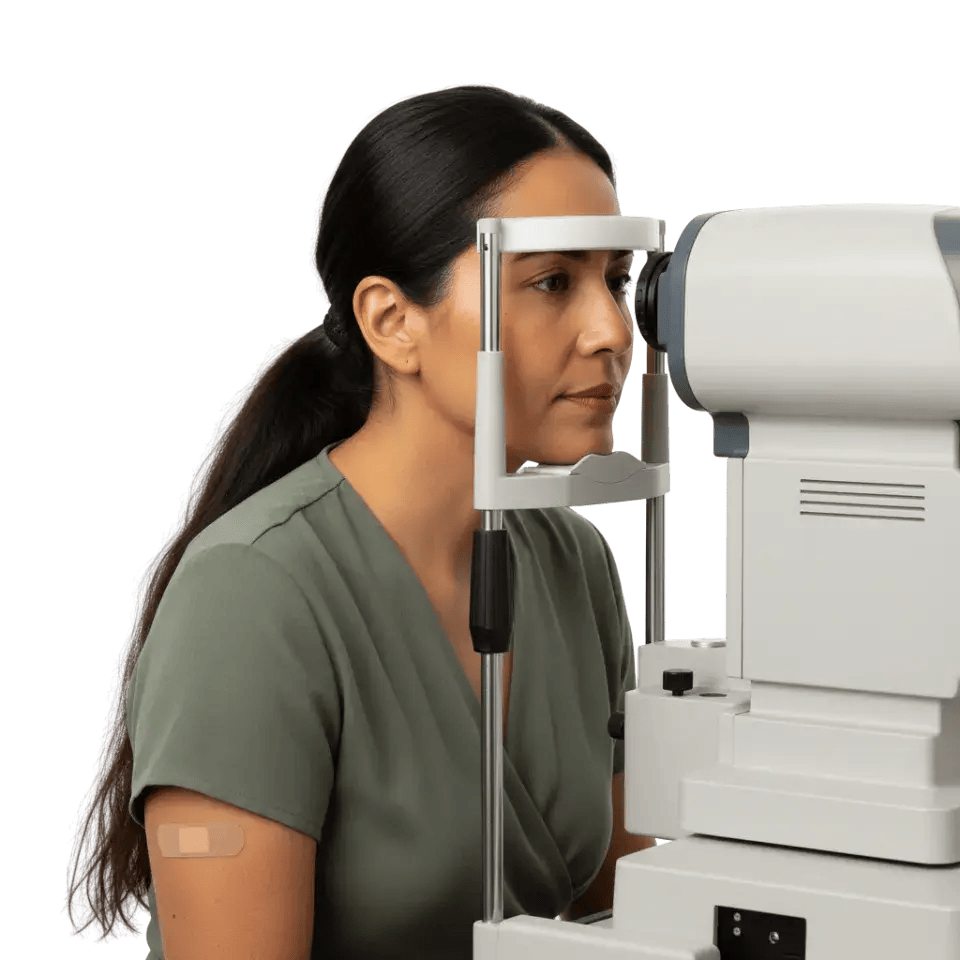
How We Diagnose Medication-Related Vision Problems
Identifying the connection between a medication and a vision change requires a careful review of both your medications and the health of your eyes. We combine a thorough history with detailed testing to pinpoint what is happening and why.
During your visit, we ask you to bring all of your medications or provide a complete list that includes prescription drugs, over-the-counter products, vitamins, and herbal supplements. We review each item to identify which ones are known to affect vision and look for combinations that might increase your risk.
We pay close attention to when you started each medication and whether the timing matches the onset of your visual symptoms. Sometimes two medications together cause problems that neither would cause alone. We also consider how long you have been taking each drug, since some eye effects only appear after months or years of use.
Our examination evaluates every part of your visual system to identify where changes may be occurring. We begin by testing how well you see at different distances and whether your current glasses prescription still meets your needs.
- Refraction testing to measure any shift in your vision prescription
- Slit lamp examination to view the front structures of your eye
- Tonometry to measure pressure inside each eye
- Dilated fundus exam to inspect your retina, macula, and optic nerve
- Evaluation of your tear film and eye surface health
This examination gives us a detailed picture of your current eye health and serves as a reference point for all future monitoring visits.
Some cases require additional testing to pinpoint exactly how a medication is affecting your eyes. We may use optical coherence tomography (OCT), a non-invasive imaging tool that creates detailed cross-sectional images of your retina to detect swelling or fluid buildup. Visual field testing maps your peripheral vision and can reveal damage patterns associated with specific medications.
Advanced imaging can also evaluate blood flow within your retina and assess the health of individual cell layers. These tools help us catch medication-related damage in its earliest stages, when the most options for intervention are still available. We may recommend corneal topography if you have focusing problems, since some drugs alter the curvature of the cornea or the flexibility of the lens.
We collaborate with your prescribing physician, primary care doctor, or specialist to discuss your medications and visual symptoms together. This allows us to understand why you are taking each medication, whether your current dose is the lowest effective option, and whether safer alternatives exist.
By working as a team, we can develop a coordinated plan that protects both your overall health and your eyesight. We may recommend that your prescribing doctor adjust your dose, switch you to a different medication, or add monitoring tests. This approach ensures nothing falls through the cracks in your care.
Treatment Approaches for Medication-Related Vision Issues
The right treatment plan depends on which medication is involved, how your eyes are responding, and how essential the drug is to your overall health. In most cases, we work closely with your prescribing doctor to find a solution that addresses both needs.
When a medication is essential and no safer alternative exists, we may recommend continuing it while monitoring your eyes on a regular schedule. This approach works well when vision side effects are mild and stable, and when the risks of stopping the medication outweigh the eye concerns.
We schedule follow-up visits based on your specific situation, typically every three to six months. During these visits, we repeat key tests to confirm that your eyes remain healthy. If we detect any progression of damage, we contact your prescribing physician right away to adjust your treatment plan.
Sometimes reducing the dose of a medication can relieve vision symptoms while still providing the treatment benefit you need. Your prescribing doctor determines whether a lower dose is safe and effective for your condition, and we monitor your eyes after the change to see whether your symptoms improve.
- Lower doses may reduce side effects while maintaining treatment benefits
- Gradual dose adjustments help prevent withdrawal or medical complications
- Vision symptoms often improve within days to weeks after a dose reduction
- Follow-up exams confirm that the adjusted dose is not causing ongoing eye damage
Many conditions can be treated with more than one medication, and your prescribing doctor may be able to transition you to a drug that does not carry the same eye risks. This option works best when multiple effective treatments exist for your condition and the switch can be managed carefully to avoid any gap in your medical care.
After switching, we schedule a follow-up eye exam to verify that your vision symptoms are improving. Some medication-related changes reverse completely once you stop taking the offending drug, while others may take weeks or months to resolve. In rare cases, damage from certain medications can be permanent, which is exactly why early detection and prompt action matter so much.
If you must continue a medication that affects your vision, we can often treat your eye symptoms directly. For medication-induced dry eye, we may recommend preservative-free artificial tears, prescription eye drops, or in-office procedures to help your eyes retain moisture. If your medication causes light sensitivity, specialty tinted lenses can make daily activities more comfortable.
When a medication blurs your vision by changing your lens or cornea, updating your glasses prescription may restore clear sight. We can also provide reading glasses or task-specific lenses to help with close work. For some patients, taking their medication at a different time of day reduces daytime visual symptoms, though you should only adjust the timing with your prescribing doctor's approval.

Protecting Your Vision While Taking Medications
Prevention and consistent monitoring are the two most powerful tools for protecting your eyes when you take medications that carry vision risks. Small, consistent habits make a meaningful difference over time.
Always inform every healthcare provider about your complete eye health history, including any existing conditions, past eye surgeries, or a family history of eye disease. Let them know if you have been diagnosed with glaucoma, macular degeneration, or cataracts, as certain medications can worsen these conditions. This information helps your doctors choose the safest treatment options for you from the start.
Mention if you wear contact lenses, since some medications cause dry eyes that make lens wear uncomfortable or unsafe. Tell your doctors about any vision changes you have experienced in the past, even if they resolved on their own. Being open about your eye health allows your entire medical team to prescribe with greater confidence and fewer surprises.
Simple home checks between eye exams can help you catch changes early. Cover one eye at a time and look at straight lines such as door frames or window edges to make sure they appear straight rather than wavy or distorted. Test your reading vision by noting whether you are holding your phone or book farther away or closer than usual.
- Check each eye separately every few days when starting new medications
- Pay attention to changes in color brightness or contrast
- Notice if lights seem to have halos or if your night vision worsens
- Keep track of headaches that occur alongside visual tasks
- Watch for increased difficulty with activities like driving or reading
If anything feels different or off, do not wait for your next scheduled appointment. Contact our office to describe what you are experiencing.
When you take a medication known to affect vision, routine eye exams become even more important than usual. We typically recommend an initial exam before you begin a high-risk medication to establish a clear baseline, making it much easier to identify any changes the drug may cause over time.
Follow-up exams may be needed every three to six months during the first year, depending on the specific medication and your individual risk factors. Once we confirm that your eyes remain stable, we may extend the interval to every six to twelve months. That said, you should always schedule an appointment promptly if you notice any new symptoms between regular checkups.
Prevention begins with open communication between you and all of your healthcare providers. Before starting any new prescription medication, ask your doctor whether it can affect your eyes and what symptoms to watch for. Request the lowest effective dose, especially if you will be taking the medication long-term.
Attend all recommended eye exams and do not skip appointments even when your vision feels fine. Some medication-related eye damage develops without obvious symptoms in its early stages. Follow your dosing instructions carefully, since taking more than prescribed can increase the risk of side effects including eye complications. Supporting your overall health through good nutrition, regular activity, and protection from UV light also benefits your long-term eye health.

Frequently Asked Questions
If you have questions about medications and their effects on your eyes, these answers offer additional guidance to help you make informed decisions about your care.
The timeline varies widely depending on the specific drug and how your body responds to it. Some medications cause visual changes within hours or days, particularly those that shift fluid balance or alter blood pressure inside the eye. Others require weeks, months, or even years of use before eye effects appear, especially drugs that cause gradual structural changes to the lens, retina, or optic nerve. Starting a symptom journal when you begin any new medication makes it much easier to identify a connection if problems do emerge.
Recovery depends on the type of medication, the nature of the damage, and how long you were exposed before the problem was caught. Many medication-related effects, such as blurred vision from antihistamines or dry eyes from certain blood pressure drugs, resolve within days to a few weeks after stopping the medication. However, some drugs can cause lasting damage to the retina or optic nerve if used at high doses for extended periods without monitoring. This is one of the strongest reasons to detect and address medication-related eye changes as early as possible.
Yes, non-prescription products can affect your eyesight just as prescription medications can. Common antihistamines, decongestants, and sleep aids may cause blurred vision, dry eyes, or difficulty focusing. Even certain nutritional supplements taken in high doses can sometimes produce visual symptoms. Always tell your eye care provider about everything you take, including vitamins and herbal products, not just prescription drugs.
A baseline exam is strongly recommended before beginning any medication known to carry eye risks, particularly those used long-term for chronic conditions. Documenting the current health of your eyes before starting treatment gives us a clear reference point that makes it far easier to detect subtle changes caused by the drug. We especially recommend baseline exams before starting medications such as hydroxychloroquine for autoimmune conditions, tamoxifen for breast cancer treatment, or high-dose oral steroids. If you have already started one of these medications without a baseline exam, it is still worthwhile to come in and establish a record now.
Several factors can increase your susceptibility to medication-related eye problems, and being aware of them helps you and your doctors plan accordingly. People who already have conditions such as glaucoma, cataracts, or retinal disease face higher risks when taking medications that affect those same structures. Older adults may be more vulnerable because age-related changes in the eye can combine with medication effects to worsen outcomes. Taking multiple medications at once, having kidney or liver problems that affect how your body processes drugs, or using higher doses for longer periods all elevate risk as well.
Medications applied directly to the eye can cause both intended and unintended vision changes. Dilating drops used during eye exams temporarily blur near vision, while some glaucoma medications can cause stinging, redness, or a shift in your glasses prescription over time. Steroid eye drops used to treat inflammation can raise eye pressure or speed up cataract formation with prolonged use. Even artificial tears or allergy drops may blur vision briefly, and drops that contain preservatives can irritate the eye surface if used too frequently.

Visit ReFocus Eye Health Manchester for Expert Guidance
If you are concerned that a medication may be affecting your vision, our team at ReFocus Eye Health Manchester is here to help you find answers and take action. We conduct thorough examinations, communicate directly with your prescribing physicians, and monitor your eyes closely over time so that your treatment plan works for your whole health. Patients from across the Manchester area trust us to protect their eyesight while they manage the conditions that matter most to their quality of life. We look forward to partnering with you and your care team for the long term.

Excellent medical practice! No wait, preliminary eye exam followed by exam with Dr L. She’s excellent. Been seeing her for years, always a pleasure. Friendly, professional, always explains everything. Highly recommend!
Kim W
Friendly efficient professional staff The place to go for World class eye care Dr Goldstein is the tops!!!!
Robert Valli
Having been to many eye doctor's offices, I can say, without a shadow of a doubt, this one is the best!
Marcus B.
I recommend them to anyone looking for an ophthalmologist. My doctor was Dr Stabile. She was excellent with me as I had her for my cataract surgery. Very informative and conscientious.
Dennis Bruyette
Finally fixed my contact lens problems after years of irritation. The doctor listened, explained everything clearly, and never pushed unnecessary products. My eyes feel great and I can wear my lenses all day comfortably. Highly recommend.
David K.

Contact Us

Tuesday: 8AM-5PM
Wednesday: 8AM-5PM
Thursday: 8AM-5PM
Friday: 8AM-5PM
Saturday: Closed
Sunday: Closed